Lettuce Entertain You: Why Fluency Matters
Lettuce Entertain You
“Lettuce entertain you” is a classic line from an old reading assessment passage. When kids read it aloud, assessors listened for more than just smooth delivery—they hoped for laughter, or at least a chuckle, as a sign the pun landed. Too often, though, the reading was fluent but flat. No chuckle meant the joke flew right over their heads; students weren't picking up on the playful language.
In one district, coaches and a principal were so eager for better results that they printed t-shirts featuring “Lettuce entertain you” with a cartoon head of lettuce. The goal? Prime students to spot the pun. It backfired into a perfect illustration of two broader lessons that apply far beyond reading:
- Fluency goes beyond word-calling and prosody—it's also about the fluency of ideas, vocabulary, and real understanding.
- Outcomes aren't a competition; chasing short-term wins can undermine genuine mastery.
Fluency
In reading instruction, we often emphasize how smoothly words flow from a student's mouth—rate, accuracy, expression. But we under-discuss the clearest marker of comprehension: real-time emotional responses. A laugh at a pun, a gasp at a twist, or a puzzled frown when something doesn't add up—these are the tells that a reader is truly processing and connecting with the text.
Genre knowledge matters too. In a mystery or whodunit, fluent readers adjust tone for foreshadowing or suspense. True fluency integrates decoding, word knowledge, genre conventions, and quick comprehension.
This isn't unique to reading. Fluency of ideas—the ability to recall and apply mounds of knowledge fluidly, under pressure, with little time to look things up—is a universal hallmark of expertise.
A doctor in the ER doesn't have minutes to Google symptoms; they need instant recall of anatomy, pharmacology, differentials, and protocols to make life-saving calls. That's fluency in medical knowledge.
A chef in a busy kitchen doesn't pause to consult recipes mid-service; they fluidly combine ingredients, techniques, flavors, and timing to plate perfect dishes under the heat of the line. That's fluency in culinary craft.
An artist doesn't deliberate over every brushstroke in isolation; in flow state, they draw on a deep reservoir of techniques, composition principles, color theory, and intuition to create without hesitation. That's fluency in creative expression.
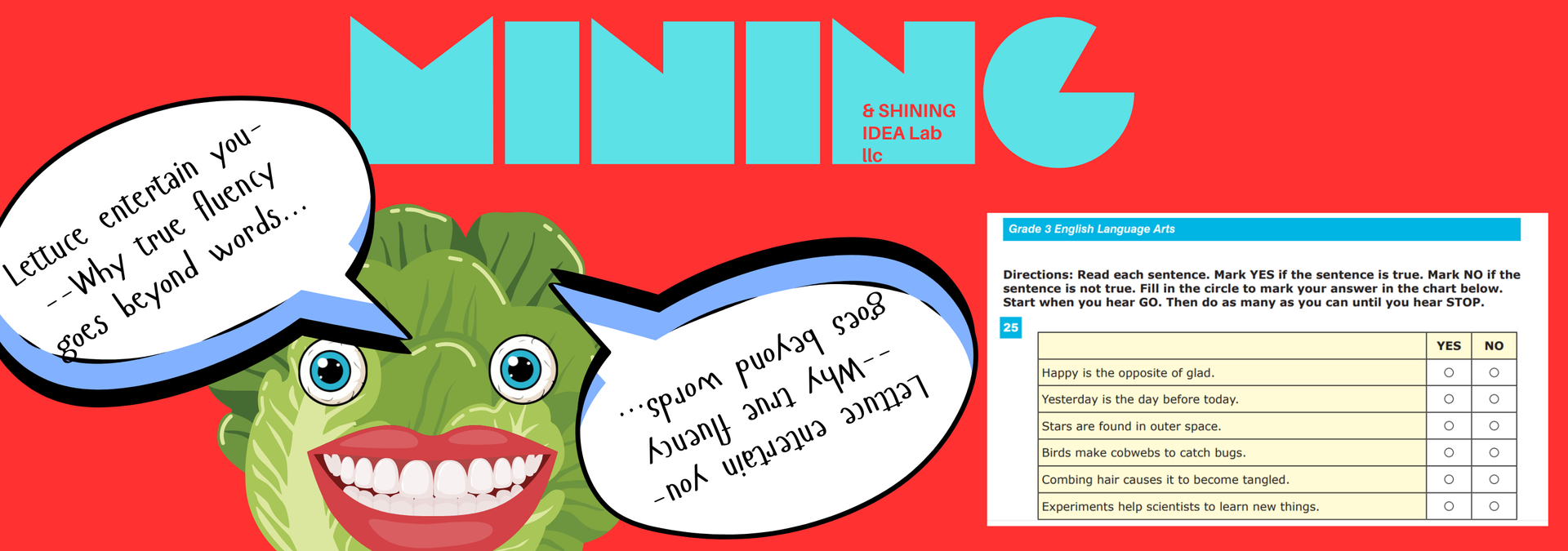
States have experimented with measuring aspects of this in reading. Tennessee came close around 2020 with a foundational literacy fluency component on the TCAP ELA assessment (especially in Grade 2). It was a simple yet powerful timed task: students read short, grade-level statements and quickly marked YES or NO to indicate if each was true. In a minute or so, it gauged decoding speed, basic vocabulary, and instant comprehension—exposing gaps that many elementary programs overlook. See the snippet below:
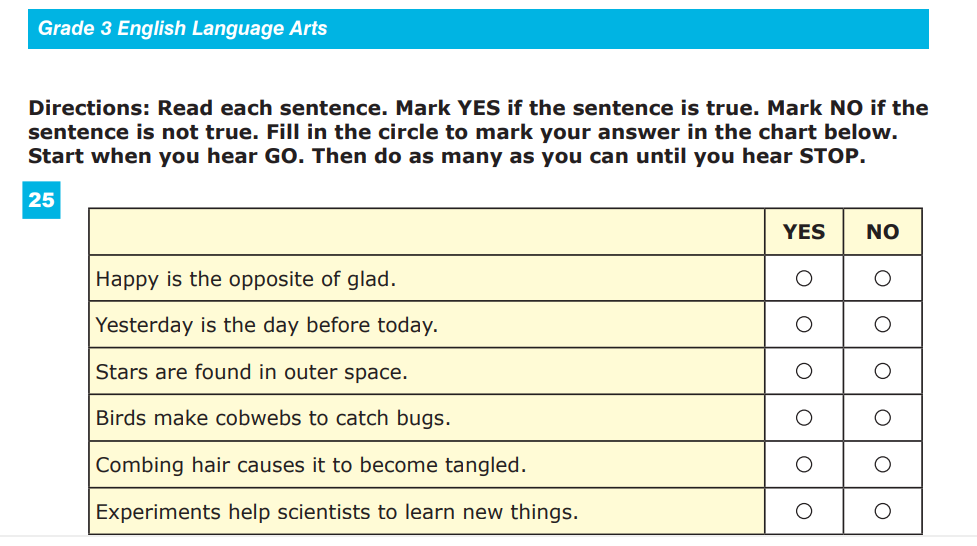
It promised actionable insights for teachers across the state, but the component was later de-emphasized or phased out. Still, the idea endures: tools that blend speed, accuracy, and meaning reveal more than isolated drills, whether in reading or any domain.
Some educators now use assessments that track vocabulary breadth, listening comprehension, and overall progress to build this deeper fluency. As more schools adopt rich, knowledge-building curricula that weave in history, science, literature, and beyond, we see kids not just decoding words but engaging ideas with curiosity and joy—laughing at clever wordplay, debating concepts, applying knowledge fluidly.
That leads to the second lesson. When pressure mounts to boost scores or rankings, some turn to shortcuts—like handing kids the punchline via t-shirts or excessive drill-and-kill prep. It might edge up short-term metrics, but it shortcuts real mastery.
A student who infers just enough from context to pass a test by a hair still misses out if everyday puns, idioms, or humor sail past unnoticed. The same principle holds in any field: surface-level performance without deep, fluent knowledge rings hollow when real demands hit.
The heart of education, especially a liberal arts approach, is connection: linking ideas, people, and experiences in ways that endure. When we prioritize genuine fluency—of words, ideas, and application—over competitive edges, we prepare people better for whatever comes next, whether it's a tough diagnosis, a high-pressure service, a blank canvas, or simply enjoying a clever joke.
Keep focusing on what matters—building fluency in words, ideas, and the joy of mastery. The real rewards show up not just in scores, but in the chuckles, quick thinking, and confident flow that follows.