Foraging in the Suburbs

James Robinson • July 18, 2024

Save time, money, and build confidence by searching inside ...
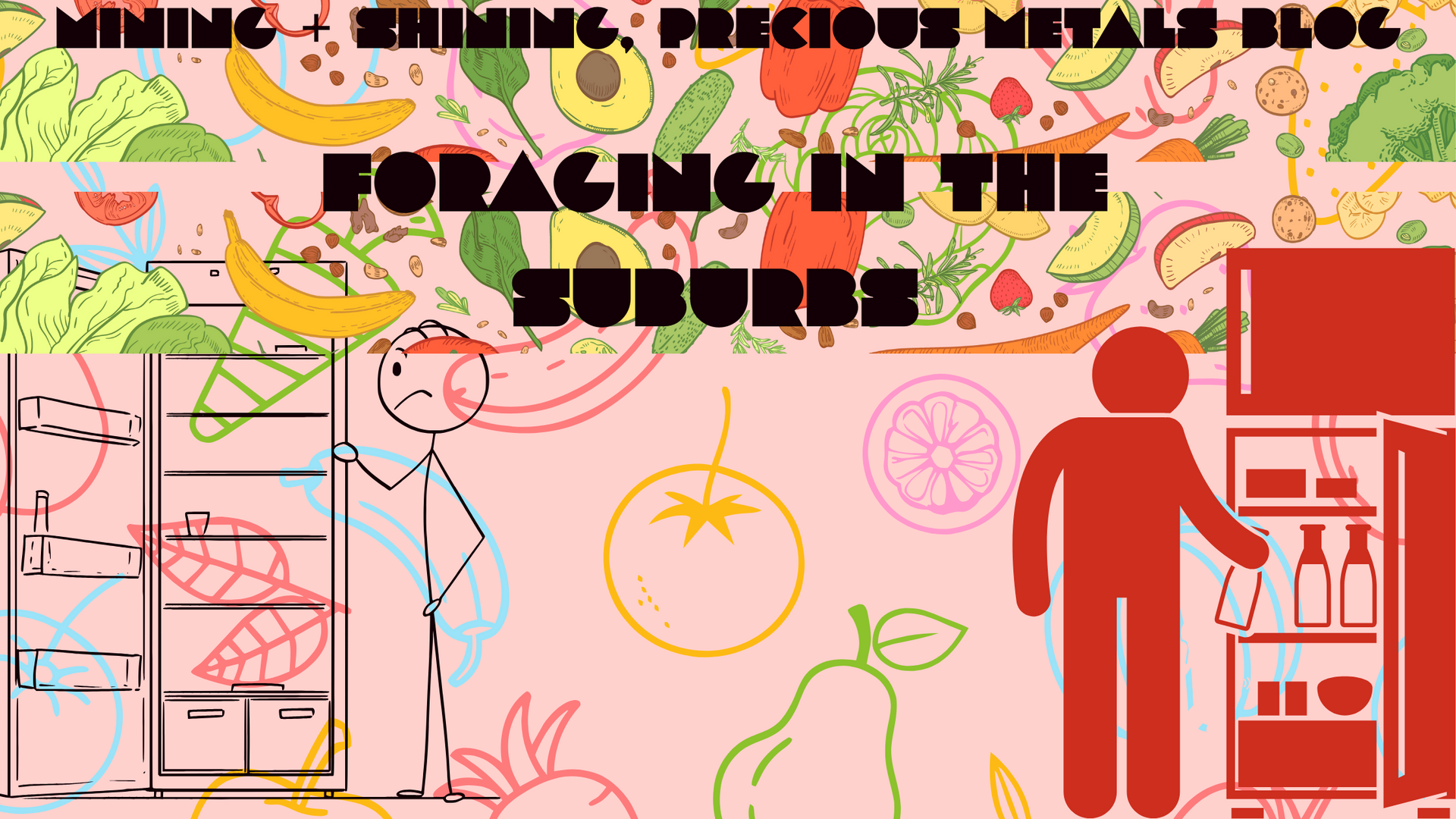
Three weeks ago, I had my chance to do some domestic foraging.


Having the house to myself,  I decided not to go shopping during the week, opting to search the territory of my house for sustenance. Whatever lurked in the pantry, the freezer and fridge would be fair game. If I turned over a tub of ice cream and found a whole frozen chicken, I’d thaw it, then separate the bird into grillable parts before dooming the rest of the carcass to a pot for soup stock.  If there were a bundle of buckwheat noodles tied into a neat cylindrical bale, I could figure something out– but it would take imagination.   And if all we had was ketchup and oatmeal, I’d find a way to put the ingredients to use until I could no longer do so.


Of course, I had some cravings and wanted certain meals, but I stayed committed although initially bored with the options. Then, after stewing a bit, solutions became clearer. 


There’s a ton of ingredients in the house– some I haven’t seen in months or ever. All I needed was a little imagination and a few minutes to look.

I found some wings, thawed them, air fried them and had a variety of sauces and spices to experiment with. Then I looked deeper in the chest freezer and found three varieties of dumplings– so I made a simple dipping sauce of chives, sesame oil and soy sauce. Lastly, there was a NY Strip steak, soba and salad. I cut the steak into sushi-thin slices, and savored it more with just a dash of sesame oil and sea salt. 


It would have been easier to go shopping, to add to our pantry and fridge, but the satisfaction of putting a meal together based on subtraction , imagination and domestic foraging was too delightful–  more economical, too. I saved time and money. Going to the store takes 30 minutes to an hour, and the cost of food is outrageous.


But imagine if we committed ourselves to internal foraging when stuck in life. Instead of adding on and looking for solutions outside of ourselves, why not take a deep inventory of our own inner resources, then make something with what we already have. It saves time and  creates more value.  We’re bigger and have more inside ourselves than we want to know, and that's the problem . Knowing what strengths and attributes are on the inside is scary because knowing is responsibility. Jungian Coaching at MINING and SHINING IDEA LAB, LLC,  is here to help. Use this link to book your 20 minute complimentary “Internal Foraging Session” today.
Precious Metal Notes

By James Robinson February 21, 2026
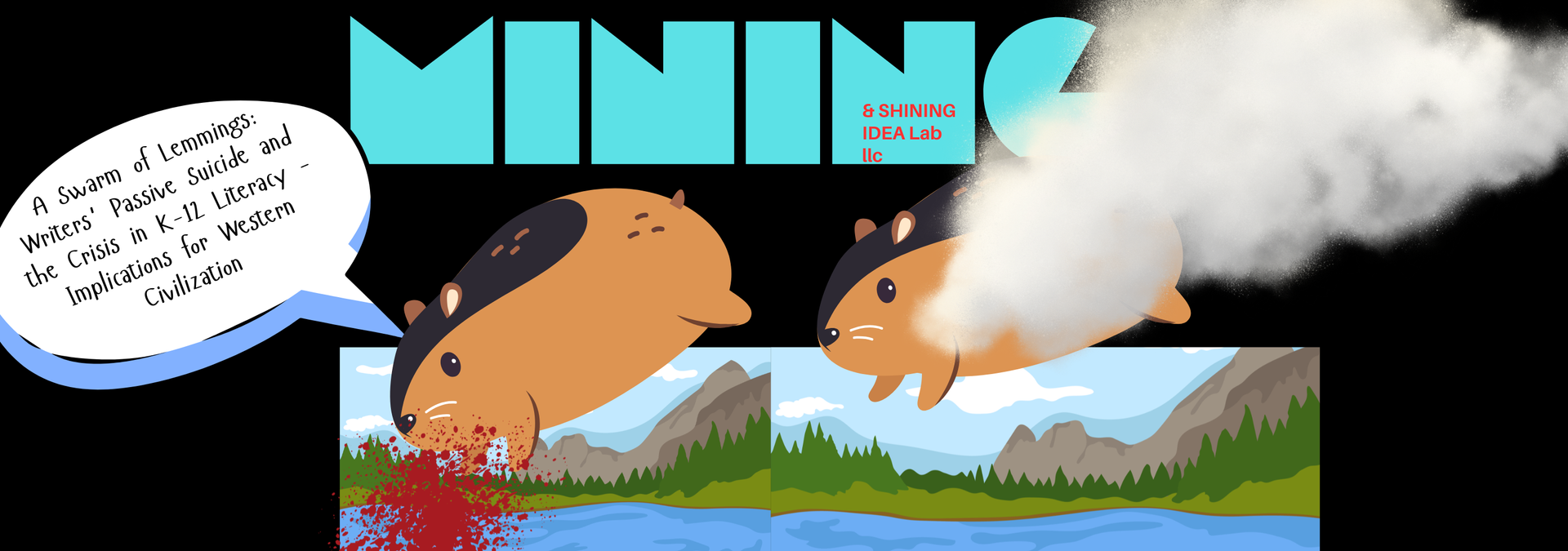
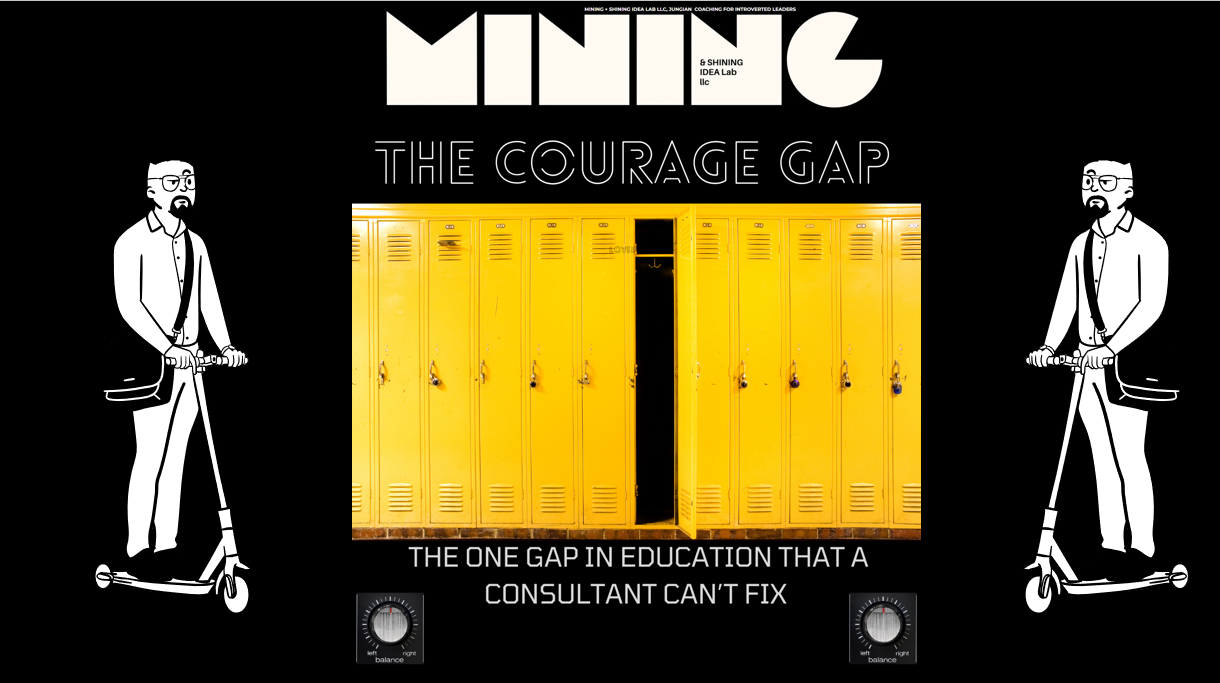
context In an earlier post, I wrote about the need for a self-inflicted sabbatical from educational leadership in 2024. The time-off allowed me to step back, read, study, think, and create at a level I've not known in years. Although we went without my salary for six-months, the data reflects it was also the most stress-free time in recent years-- likely driven by the walks, meditation, prayer and just leveling myself to a position of just learning again. The openness matters. During that time, I created a series of talks, titled The Courage Gap: Another gap in education that a consultant can't close. Originally, they were called "Career-Suicide Notebooks", the reason being my plan was to walk away from education all together. Instead, what I learned will inform my work for years. I've heard it said that Buddhist monks can see the world in a grain of rice. After being immersed in education for several years, I see the world in a school ecosystem. Often, schools enter my creative work and the way I think about creativity enters my work in schools. The first video is called 33% and it looks at the proficiency scores of 4th grade students on the NAEP Assessment. Additionally, it looks at the broad economy that works to maintain the status quo. It's a very performative video, very low-brow-- but it sets the context for the rest of the talks. Moreover, many of the issues can be extrapolated across sectors.
By James Robinson February 21, 2026
Lettuce Entertain You “Lettuce entertain you” is a classic line from an old reading assessment passage. When kids read it aloud, assessors listened for more than just smooth delivery—they hoped for laughter, or at least a chuckle, as a sign the pun landed. Too often, though, the reading was fluent but flat. No chuckle meant the joke flew right over their heads; students weren't picking up on the playful language. In one district, coaches and a principal were so eager for better results that they printed t-shirts featuring “Lettuce entertain you” with a cartoon head of lettuce. The goal? Prime students to spot the pun. It backfired into a perfect illustration of two broader lessons that apply far beyond reading: Fluency goes beyond word-calling and prosody—it's also about the fluency of ideas, vocabulary, and real understanding. Outcomes aren't a competition; chasing short-term wins can undermine genuine mastery. Fluency In reading instruction, we often emphasize how smoothly words flow from a student's mouth—rate, accuracy, expression. But we under-discuss the clearest marker of comprehension: real-time emotional responses. A laugh at a pun, a gasp at a twist, or a puzzled frown when something doesn't add up—these are the tells that a reader is truly processing and connecting with the text. Genre knowledge matters too. In a mystery or whodunit, fluent readers adjust tone for foreshadowing or suspense. True fluency integrates decoding, word knowledge, genre conventions, and quick comprehension. This isn't unique to reading. Fluency of ideas—the ability to recall and apply mounds of knowledge fluidly, under pressure, with little time to look things up—is a universal hallmark of expertise. A doctor in the ER doesn't have minutes to Google symptoms; they need instant recall of anatomy, pharmacology, differentials, and protocols to make life-saving calls. That's fluency in medical knowledge. A chef in a busy kitchen doesn't pause to consult recipes mid-service; they fluidly combine ingredients, techniques, flavors, and timing to plate perfect dishes under the heat of the line. That's fluency in culinary craft. An artist doesn't deliberate over every brushstroke in isolation; in flow state, they draw on a deep reservoir of techniques, composition principles, color theory, and intuition to create without hesitation. That's fluency in creative expression. States have experimented with measuring aspects of this in reading. Tennessee came close around 2020 with a foundational literacy fluency component on the TCAP ELA assessment (especially in Grade 2). It was a simple yet powerful timed task: students read short, grade-level statements and quickly marked YES or NO to indicate if each was true. In a minute or so, it gauged decoding speed, basic vocabulary, and instant comprehension—exposing gaps that many elementary programs overlook . See the snippet below: